
Generating value with sustainability
Green policies are not a tax to pay, but on the contrary an investment that generates profit
Article published on: MIT Sloan Management Review Italy, Year 3, Number 1, January/February 2024
More and more companies are reporting their results not only in financial terms, but also in terms of sustainability. The markets expect it and the analysts are watching us. Almost all international organizations, from non-governmental organizations to United Nations agencies, measure their impact with the indicators of Agenda 2030, the main system of documentation of our collective progress on these issues.
In some areas, however, there continues to be resistance to considering sustainability as a fundamentally strategic issue. Some believe that it is simply about communication orcompliance, objectives orthogonal to those of company profit. Others fear that their pursuit is even counterproductive, an additional cost with social benefits that are difficult to monetise. All of this reveals a fundamental misunderstanding.
The economic growth to which the entire modern productive world contributes is a phenomenon of the 20th century. The Second Industrial Revolution, mass emancipation and the demographic explosion made the widespread improvement of material conditions a universal political objective.
However, it took time for growth to also become an issue of economic policy. The end of World War II and the birth of dozens of countriesexcolonial, independent and eager to enrich themselves, made long-term growth a universal economic objective. And economists posed the problem of how to encourage it.Growth arrived: just think of the transformation of South Korea during the Park Chung-hee era or the Italian economic miracle.What quickly became apparent, however, was that this growth was producing collateral damage. The natural resources from which the economy extracted value incurred an unaccounted cost, an externality, which risked undermining the foundations of social growth. What to do? It was the 1970s. The oil crisis and the famines connected to it (even if due to contingent phenomena) gave plastic form to these concerns. An answer was given by the Club of Rome, founded by the industrialist Aurelio Peccei, who espoused neo-Malthusianism: the evident limitation of the Earth could only restrict our aspirations for growth.In the 1980s, a synthesis was sought between environmental concerns and development aspirations. The result was the reportThe future of all of usof 1987, produced by the Brundtland Commission of the United Nations. Brundtland defined 'sustainable development' as that which responds to the needs of the present, without compromising the ability of future generations to satisfy their own needs.From this drive, the first United Nations Earth summit was born in 1992, where the framework agreements on climate, biodiversity and desertification were signed which, today, are the international architecture on which industrial policy initiatives based on sustainability are built, such as Next generation Eu and, most recently, the Pnrr.In 1995, economist Kenneth Arrow formalized the hypothesis that there was an 'inverted U'-shaped relationship between environmental damage and per capita income. The idea was that countries started out poor and with a low environmental impact, then went through a period of economic growth that damaged the environment.Recovering the environment, however, did not require a return to poverty because, beyond a certain level, the increase in wealth brought with it attention to material conditions and the tools to improve them, reducing the environmental impact.
The academic discussion on these curves continues. The profound reason why markets pay attention to sustainability is the increasingly deep-rooted belief that economic growth is, yes, the cause of environmental problems, but it can also be the main solution, provided it is directed correctly.For example, it is clear that the solution to the problem of climate change is the electrification of the economy and the development of alternative technologies for the production, storage and transport of energy, from renewables to batteries and hydrogen. Talking about these industrial transformations inspired by sustainability as a cost to the real economy, as is sometimes done, means not understanding their driving force. It would be like considering the introduction of Ford's Model T in 1908 as an unnecessary cost, because it risks reducing sales of horses and buggies.Sustainability is nothing more than a particular way of creating value, suited to the dominant needs of the contemporary world. In all likelihood, it is to the 21st century what the second industrial revolution was to the 20th. Understanding the implications is not a problemcompliance, but one of the most important strategic challenges of our time.
Link
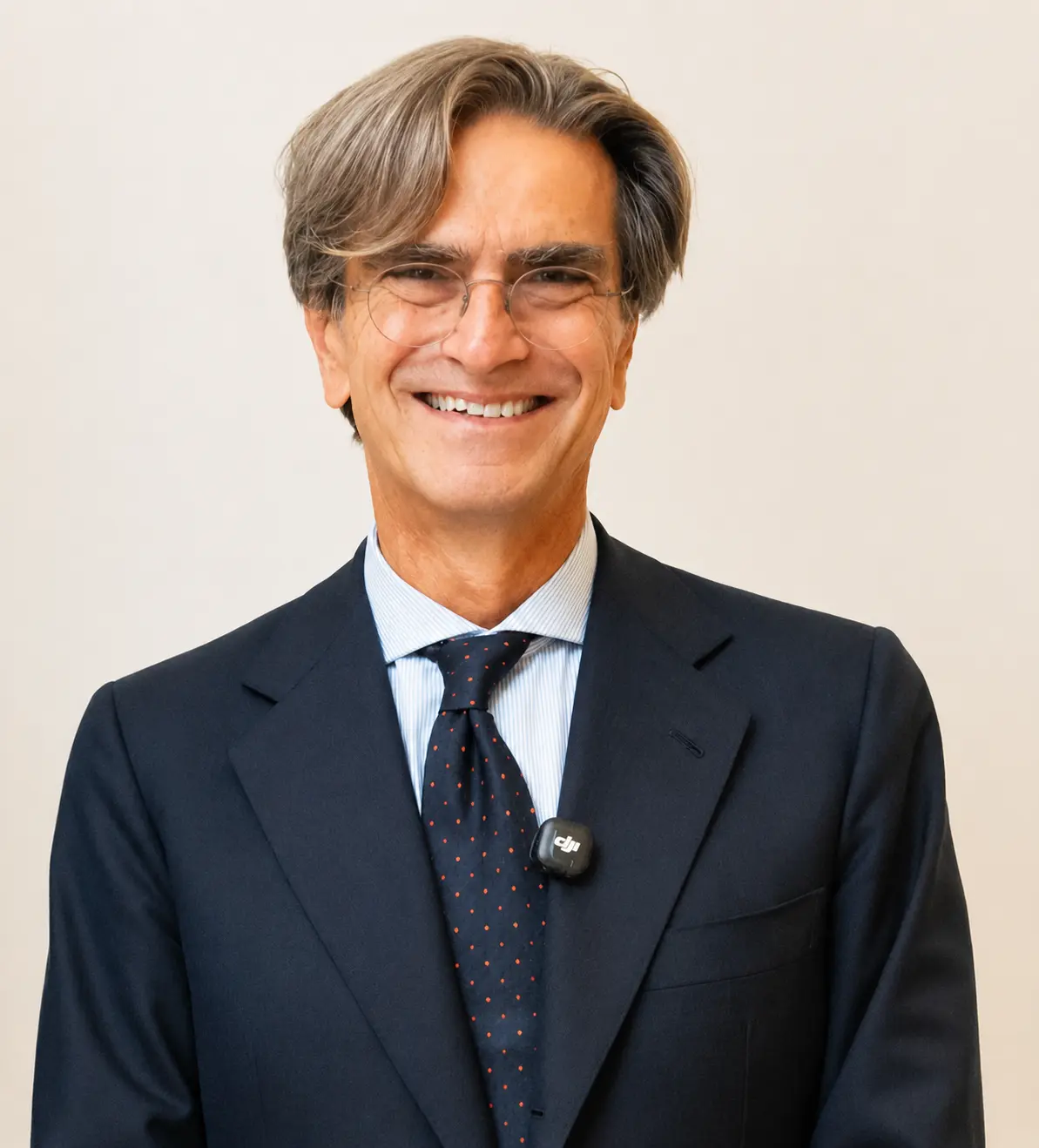
By Giulio Boccaletti, Scientific Director of the Euro-Mediterranean Center on Climate Change and Professor of Strategy and Sustainability at the University of Oxford
We increase your company's long-term value
Discover our consulting services