Agroindustry, why fake Made in Italy is an opportunity*
Luigi Consiglio (CEO Eccellenze d'Impresa): it is necessary to act strategically on the market, focusing on product quality and internationalization plans
By Luigi Consiglio - CEO of Eccellenze d'Impresa
*Comment published on the Il Sole 24 Ore website on June 25, 2024
Research is periodically conducted on the damage caused by the imitation of Italian products, particularly to our agri-food industry. The latest study, presented by The European House Ambrosetti, outlines the losses our companies suffer from the sale of foreign products that mimic Italian origin in their name or brand communication. These reports are consistently followed by debates about the reasons behind these "attacks" on Made in Italy and calls for greater protection of Italian-made goods.
However, these discussions often fail to get to the root of the problem and attempt to understand how these phenomena could be countered with market logic, which, by nature, is far more effective than simple regulatory interventions.
I would like to prompt the Italian agro-industrial sector to reflect on how this issue—if not addressed correctly—can devolve into ineffective discussions that fail to generate real value for agriculture and our food industry
More quality and internationalization plans, fewer regulatory interventions
In fact, I believe that Italian companies — rather than seeking advantages through regulatory interventions — should adopt a more strategic approach in the market, focusing on product quality and effective internationalization plans.
Let me start with an initial observation: the success of a product abroad is not determined by a more or less explicit association with Italian manufacturing, but rather by the quality of the product itself. Take the United States, for example, by far the market where Italian exports have the highest added value: many Italian companies already produce on American soil. This means that U.S. law no longer permits companies to market products as Made in Europe/Italy if they are not produced there. For instance, Lindt was forced to remove the wording “Made in Switzerland since 1845” from its brand because it has a production facility in the U.S. Similarly, Barilla, which also has a production plant in the U.S., this year preemptively removed the phrase “Number 1 in Italy” to avoid potential disputes.
The risks of class action in the United States
In fact, American courts prohibit any reference to origins that do not match the actual place of production. The fear of potential class actions compels serious companies to avoid misleading American consumers. Other large Italian producers, such as Fratelli Beretta, Citterio USA, and subsidiaries of multinationals like Galbani and Ferrero, do not include any references to Italy on their packaging. This is because such claims would mislead American consumers and expose the companies to class action lawsuits. However, the success of these brands in the U.S. demonstrates that the key to success is offering American consumers quality products, derived from production processes, processing techniques, and unique raw materials. These qualities do not need to pretend to be made in Italy to be recognized and appreciated
CREDITS: italianfood.net
The debate on Made in Italy to defend
There is also the need to clarify which Italian products need to be defended, in order to avoid unnecessary confusion and distractions from the real issue at hand, which is the protection of the agricultural and industrial uniqueness of Italy. The list of “copied” products, as described in the latest research cited, places ragù, a French culinary preparation, in first place, followed by pesto, a basil-based sauce. Both are fresh and have a short shelf life before expiration. In these cases, it is even difficult to understand what defending Italianness truly means. It would be like saying that anyone in Italy who prepares guacamole could be accused of making a Mexican dish. Should we only import guacamole from Mexico? And what about hummus? Or kebab? The serious issue of defending uniqueness cannot be confused with bizarre claims such as the defense of pizza or carbonara.
What happens along the distribution chain
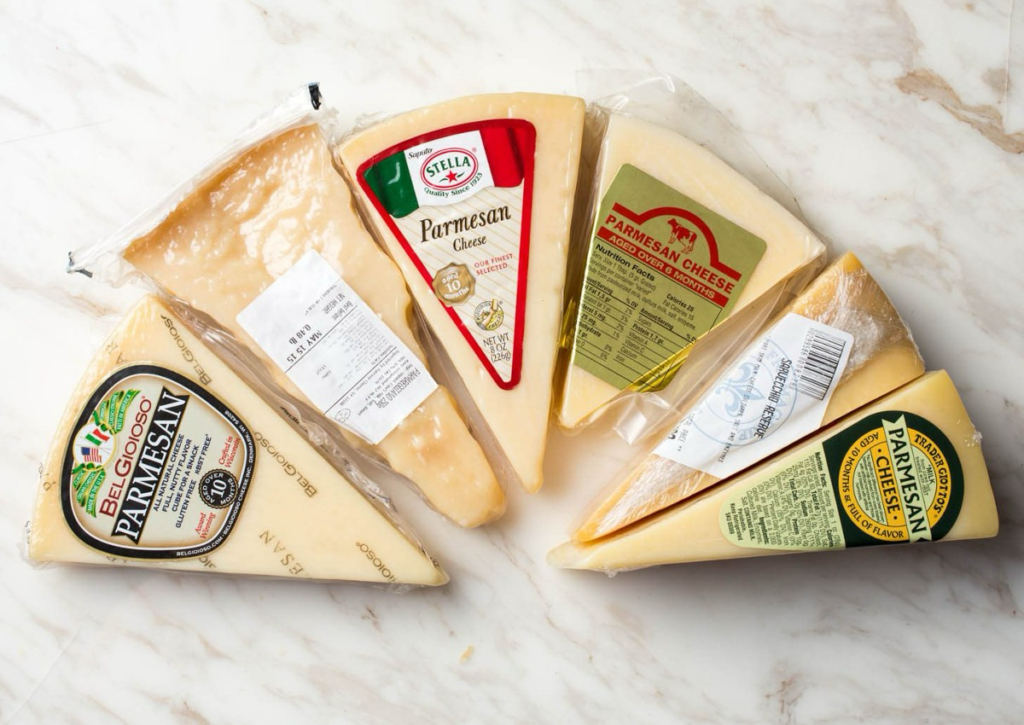
Where the issue becomes more ambiguous is with names like "parmesan." It is important to note that Parmigiano Reggiano, along with Grana Padano and Pecorino Romano, is sold in the U.S. and several other countries, through quotas granted to specific importers. As a result, these products can reach prices of over $16 per pound, and sometimes even $20. Therefore, it would be advisable to study American antitrust regulations to determine whether it's possible to intervene on the players within the distribution chain who are profiting by creating position-based rents that add little value. This practice reduces the products’ saleability and, in turn, their volumes.
Italian sounding goodbye, welcome made by Italian
It could also happen that a dairy producer from Parma, Mantua, or Cremona decides to set up production in Wisconsin, where the milk is exceptional, and produce a Grana that is aged properly. The product would be made in the Italian style but cost around $10 per pound. Moving Italian expertise and craftsmanship closer to places of consumption is a powerful opportunity that only the Italian system can offer. The strategic objective would be to replace "Italian sounding" with "Made by Italians," ensuring the quality and food safety that only Italians can provide globally.
