The Unexpected Disruption of Japanese and Italian Industrial Systems
The global economy is a dynamic environment where nations and businesses must continuously adapt to remain competitive. Italy and Japan, two nations celebrated for their cultural heritages and industrial innovation, demonstrate how leadership and innovation can drive excellence. Insights from Luigi Consiglio’s contribution in "Campioni d’Italia" and Ulrike Schaede’s "Japan Re-emerges" reveal the shared strategies and approaches these nations employ to maintain their status as global economic powerhouses.
Leadership plays a crucial part in both countries’ growth. Business executives in Italy frequently have a strong emotional relationship with their companies, many of which are family-owned and have their roots in handmade customs.
Consiglio's perspectives demonstrate how these leaders create goods that appeal to people worldwide by balancing the importance of tradition and innovative tactics. According to Schaede, Japanese business executives have adopted a transformative leadership style. By avoiding strict, hierarchical systems, they have promoted creativity and adaptability, allowing their companies to meet contemporary demands while emphasizing precision and excellence.
The foundation of both Japanese and Italian corporate strategies is innovation. Italian businesses thrive in the food, fashion, and design sectors as they blend traditional skills with innovative technologies. This marriage of the old with the new develops an attractive offer that captivates international markets.
Japan's technological superiority is the foundation of its innovation strategy. Japanese companies make significant investments in developments that boost their competitiveness and help address global issues, such as robotics and green energy. Both nations show that innovation thrives when it is rooted in a respect for tradition and a forward-looking vision, despite their divergent areas of focus.
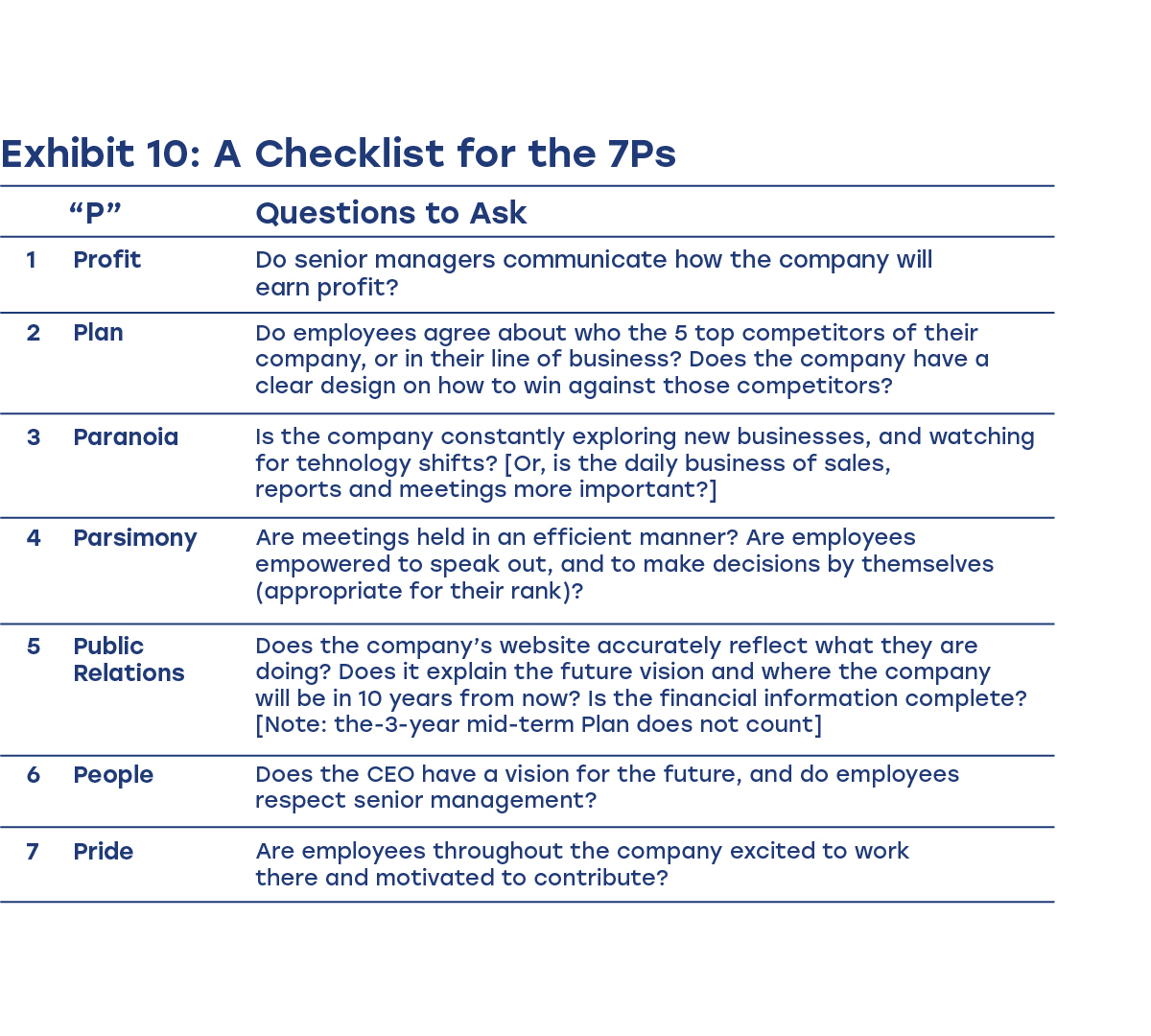
Οn the Εxhibit mentioned above, we observe the seven common themes shared by 20 of the 200 CEOs and senior managers who responded to the interview questions explaining their strategy, operations, and profitability according to Schaede. It seems that this checklist is the recipe for success, not only in Japan but likewise everywhere.
The two countries are further united by their emphasis on global integration. Italian companies are well known for using strong branding and a dedication to quality to break into international markets. In recent decades, Japan, which has historically been more isolated, has embraced globalization by purchasing foreign businesses and establishing strategic alliances.
Persistence and adaptability have also been critical to their success. Italian businesses were put to the test during the 2013 financial crisis, and many of them responded by cutting back on debt and simplifying operations. Consiglio's analysis highlights how this resilience has put Italian companies in a position to grow consistently. Japan has experienced its fair share of demographic and economic difficulties. In this competitive world with a rapidly changing market, to be able to remain strong, Japanese businesses have responded by abandoning traditional keiretsu structures and implementing more adaptable organizational models, as Schaede's work explains.
Other pillars that both countries have in common are sustainability and governance. Honesty and moral leadership are highly valued by Italian businesses, which make sure that their operations reflect the ideals of society. In a similar vein, Japanese businesses are progressively adopting sustainability into their main plans, giving eco-friendly practices and technologies the highest priority in response to the demands of the global environmental community.
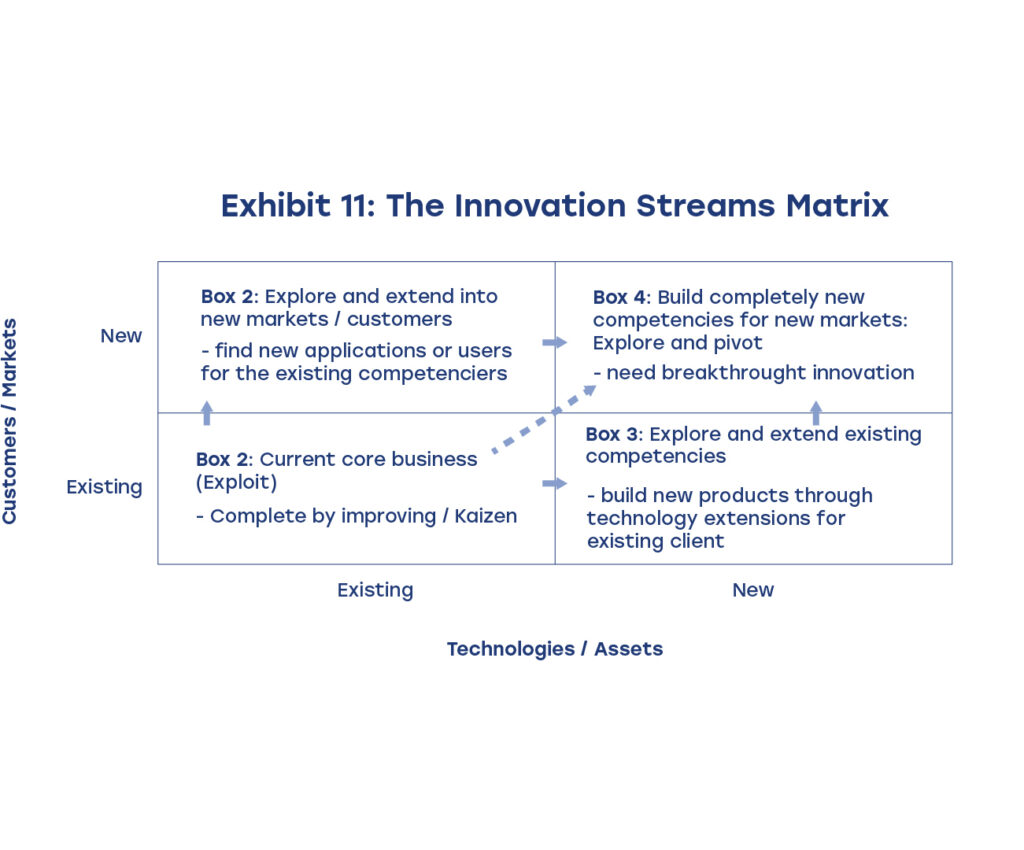
There are two questions that companies need to answer, according to Schaede : (1) What are our current core (“exploit”) skills, and (2) How can we extend those into new (“explore”) businesses that are special, smart and difficult-to-make and difficult-to-imitate?
The following matrix is a primary resource for finding the answers to the questions. It guides you on how to have an organized framework for handling innovation across a range of corporate functions. It highlights the balance between using existing competencies and exploring new technologies or markets by classifying creativity into four domains. Businesses that thrive in their core skills, for example, might find new uses or clients for current technologies while simultaneously implementing small changes, to keep a competitive advantage. On the other hand, investments in completely new markets and technologies are necessary for breakthrough inventions, highlighting the significance of long-term strategic planning. By ensuring that operational excellence supports the organization's larger innovative aims and enables both immediate advantages and sustainable market leadership, this dual focus on efficiency and exploration is in line with the 7Ps approach.
The lessons learned point to a common goal of greatness that is made by creativity, leadership, and flexibility. Both countries show that success comes from a dedication to change while being loyal to one’s heritage rather than being limited by size or resources. Their stories serve as a testament to the power of blending tradition with modernity, offering a blueprint for other nations and businesses seeking to thrive in an increasingly complex world. By embracing their unique strengths and shared values, Italy and Japan continue to inspire a global audience showing that the pursuit of excellence knows no limits.
